Airese: Sleep Apnea Screener
A clinical screening journey compressed from a 27-step paper questionnaire into a single night at home, designed to feed The Air Station's care funnel while never overstepping into diagnosis.
At a glance
A 27-step paper screening questionnaire collapsed into 9 in-app steps around one night of passive recording — a 67% reduction in intake friction.
Sole product designer, end to end: competitive benchmarking, the service blueprint, every screen and interaction, the Rive motion work, and two rounds of moderated usability testing.
Six doctors across Singapore, Malaysia and Indonesia committed to receive referrals before launch. Ships September 2026.
It screens, it never diagnoses — every line of copy touching risk was cleared with a medical advisor before it shipped.
67%
Intake friction removed
1 night
Replaces the clinic questionnaire
6
Doctors committed before launch
3
Countries in the referral network
The problem
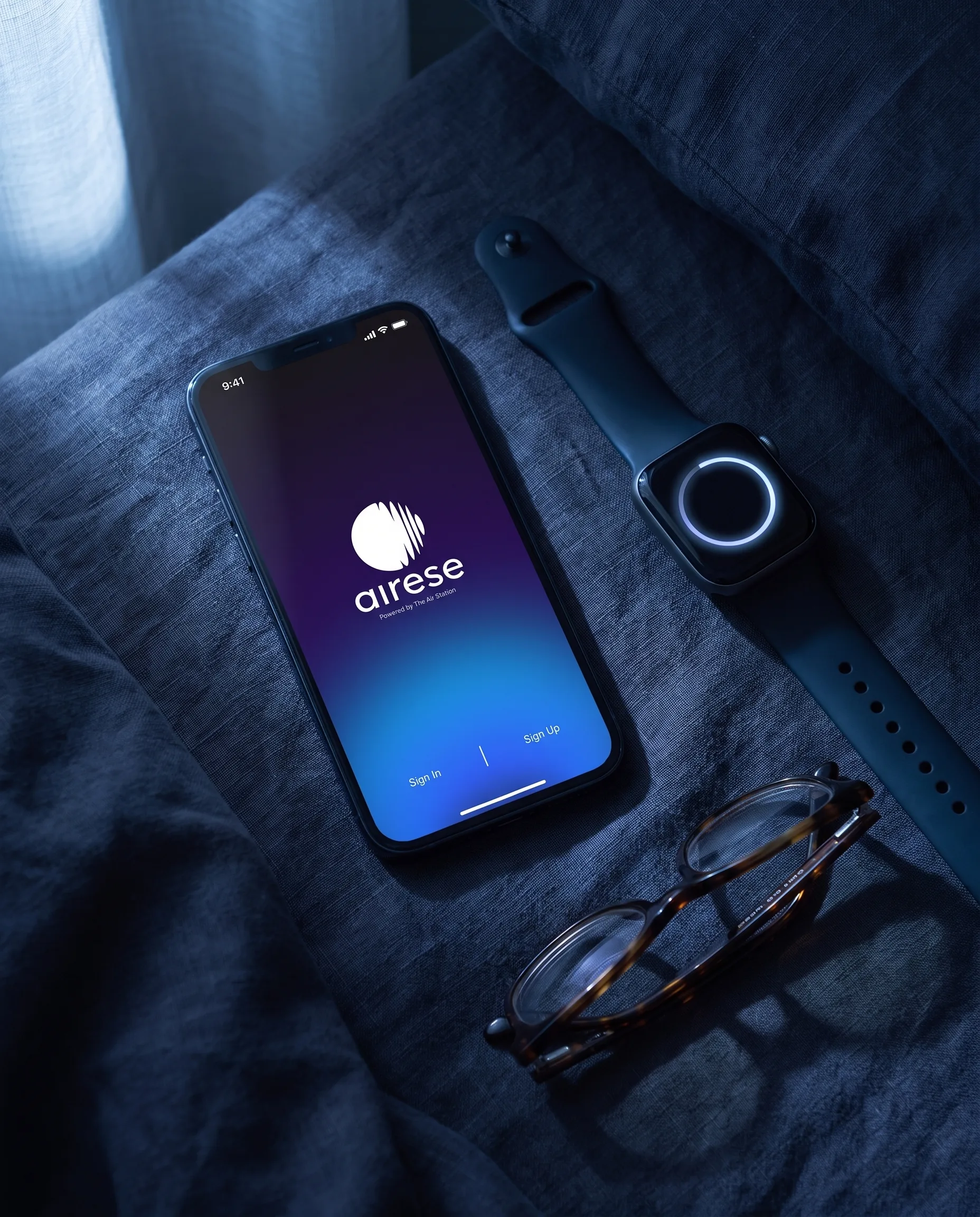
Airese is a mobile app from The Air Station, a CPAP therapy provider. It does two jobs: raise awareness of Obstructive Sleep Apnea among people who have never been diagnosed, and turn that awareness into a lead for care. It records night time breathing sounds and reads blood oxygen synced through Apple Health or Health Connect, then returns a Sleep Score and a risk summary each morning. It screens, it does not diagnose. When a result looks serious, it invites the person to request a call back from The Air Station Customer Care Centre, who guide them toward a checkup and, where suitable, a Home Sleep Test. The wider goal was to replace a long paper screening questionnaire with a single night at home.
Strategic alignment
The situation
The challenge
The Air Station sells CPAP therapy, yet most people who need it have never been told they might. The bottleneck is awareness, because the treatment already exists. Airese sits at the top of the care funnel: a free way to check a worrying symptom at home and, when a night looks serious, a guided path toward care.
That position created the core tension. The app needed the warmth of a consumer sleep tracker so people would actually use it, and enough clinical credibility for a serious result to be taken seriously, all without ever claiming to diagnose.
My role and contribution
I was the sole product designer, working with one engineer and a product manager, with a medical advisor reviewing every line that touched risk. I owned the product end to end: the research and competitive benchmarking, the service blueprint that maps the full journey from a night of recording to a doctor referral, every screen and interaction, the Rive motion work, and two rounds of moderated usability testing that decided what shipped.
Two constraints framed every decision. Every line of copy touching risk was cleared with the medical advisor before it shipped, and the app had to stay smooth on the modest Android phones our clinic partners use. Working solo across clinical, engineering and business voices meant the role was as much alignment as it was screens.
Key objectives
Replace the paper questionnaire
Collapse a 27-step paper screening intake into a single night of passive recording at home, ending at 9 in-app steps.
Turn serious results into care
A critical result opens a call-back with The Air Station Customer Care Centre, booked from inside the app.
Credible without diagnosing
Frame the Sleep Score and Breathing Disturbance Index as an awareness indicator, banded by severity, never a diagnosis.
Perform on modest hardware
Full-night audio recording and morning scoring that stays smooth on the entry-level Android devices clinic partners rely on.
Studying the category
I benchmarked five sleep apps across onboarding, data density and tone of voice. Sleep Cycle and SnoreLab are warm and nearly frictionless but stop at the data. SleepCheckRx is an FDA-cleared screener with clear risk bands, locked behind a prescription. Airese pairs the banded clarity of the clinical screener with the warmth of the consumer apps, then adds the piece none of them have: a route from a bad night to an actual clinician.
Systems thinking
Airese was designed as a full service instead of a single screen. The system spans a night of recording, a morning verdict, a human call-back and a referral network of six doctors. Every hand-off was mapped before any UI was drawn.
Service blueprint, end to end
From phone-by-the-bed recording to Sleep Score, to the Customer Care Centre call-back, to a Home Sleep Test and CPAP consult with one of six confirmed doctors across Singapore, Malaysia and Indonesia. The app is one touchpoint in a care pipeline.
Severity-banded decision system
Every recording resolves into a Sleep Score out of 100 and a Breathing Disturbance Index, an estimate of significant events per hour derived from snoring, gasping and blood-oxygen drops. Severity bands then decide how firmly the app nudges someone toward a checkup: a calibrated escalation rather than a binary alarm.
Designed for the worst night
The critical path came first: what happens when a night looks severe. The severity branch, the call-back flow and the fallback guidance were mapped before the happy path was polished. In a screening product, the serious result is the product.
Process archive — the full flows & structure, 2 artefacts for the deep read
The process
The app opens to a splash that routes returning users straight to the home screen and new users into account creation. No marketing wall sits between a person and the screening.
A short, animated introduction explains what Airese listens for and why, in calm language reviewed with the medical advisor.
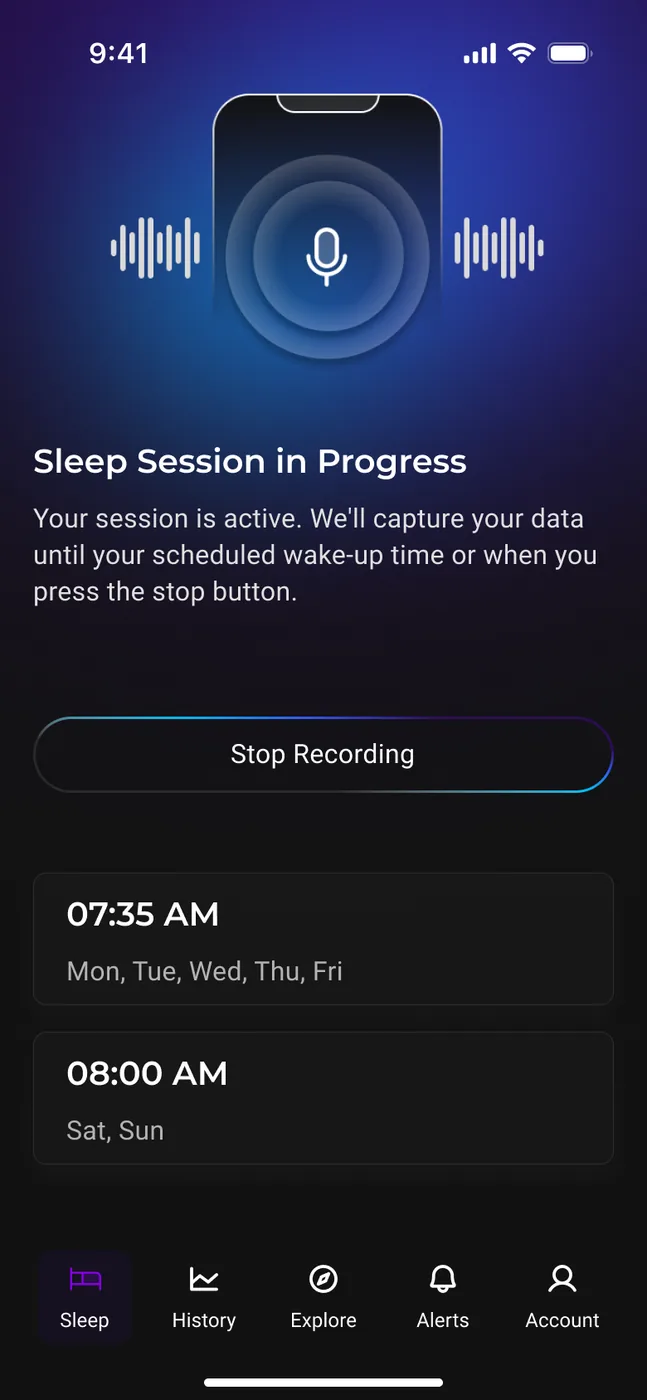
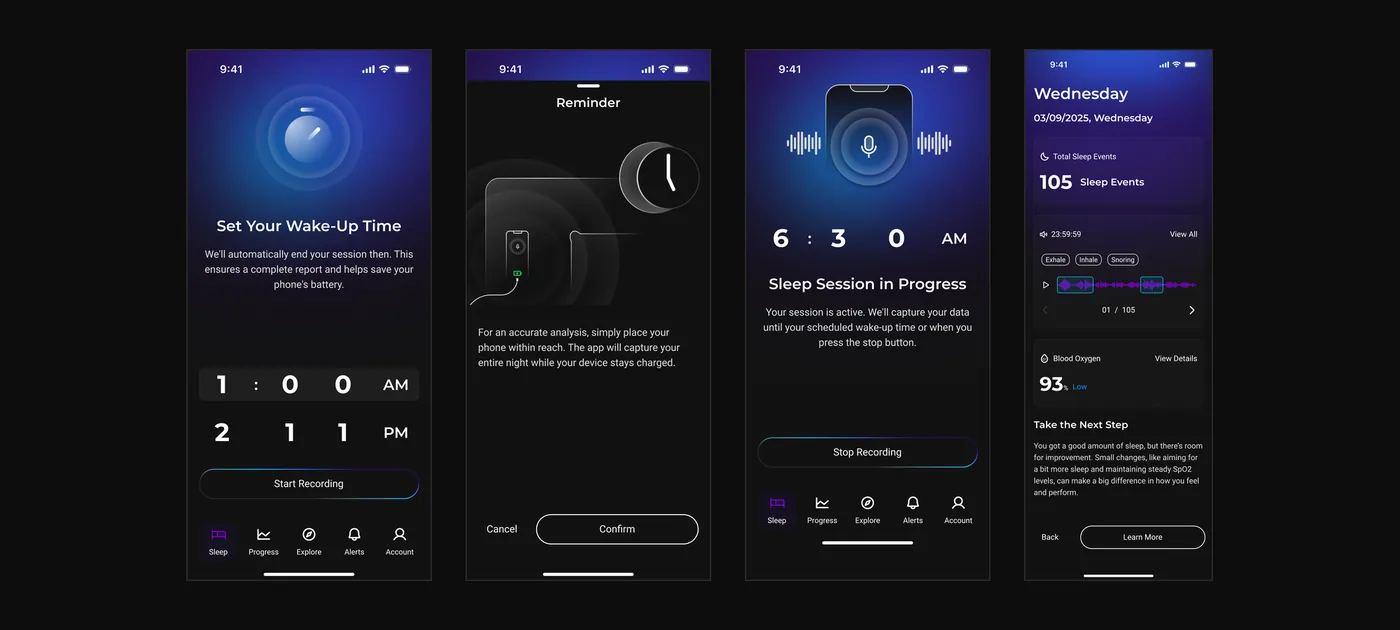
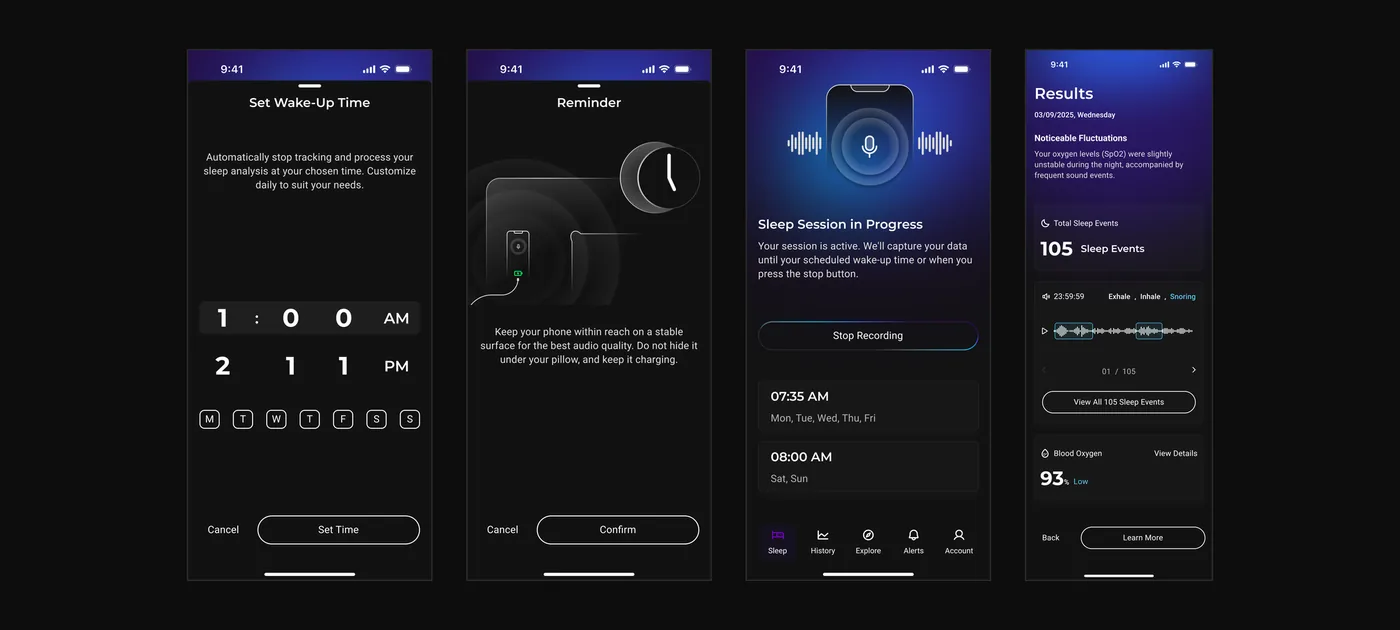
Recording can end automatically at multiple fixed times on specific days, a version-two addition after testing showed people frequently forgot to stop the session on waking. The time itself is set with the iOS-style rotary picker testing proved most familiar.
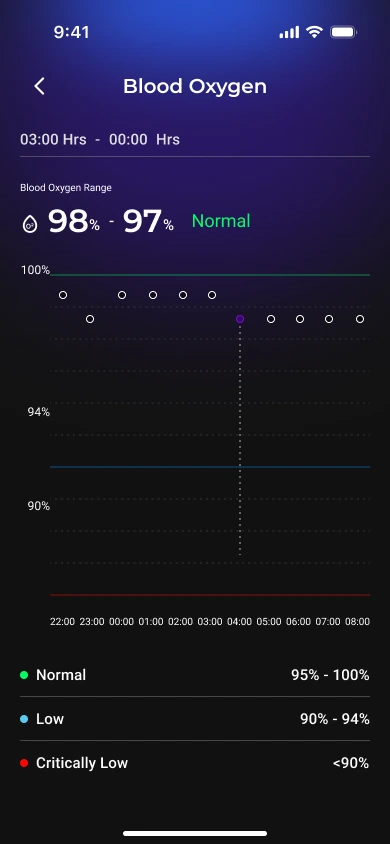
Every night produces a Sleep Score out of 100 and a Breathing Disturbance Index, the number of significant events per hour, calculated from snoring and gasping events and blood oxygen drops.
Information architecture
The solution
Three product pillars carry the screening journey, each one shaped directly by usability testing: a frictionless onboarding that sets up the first night, a results visualisation that is the product's core value, and a hand-off that ends with a human voice.
Frictionless onboarding
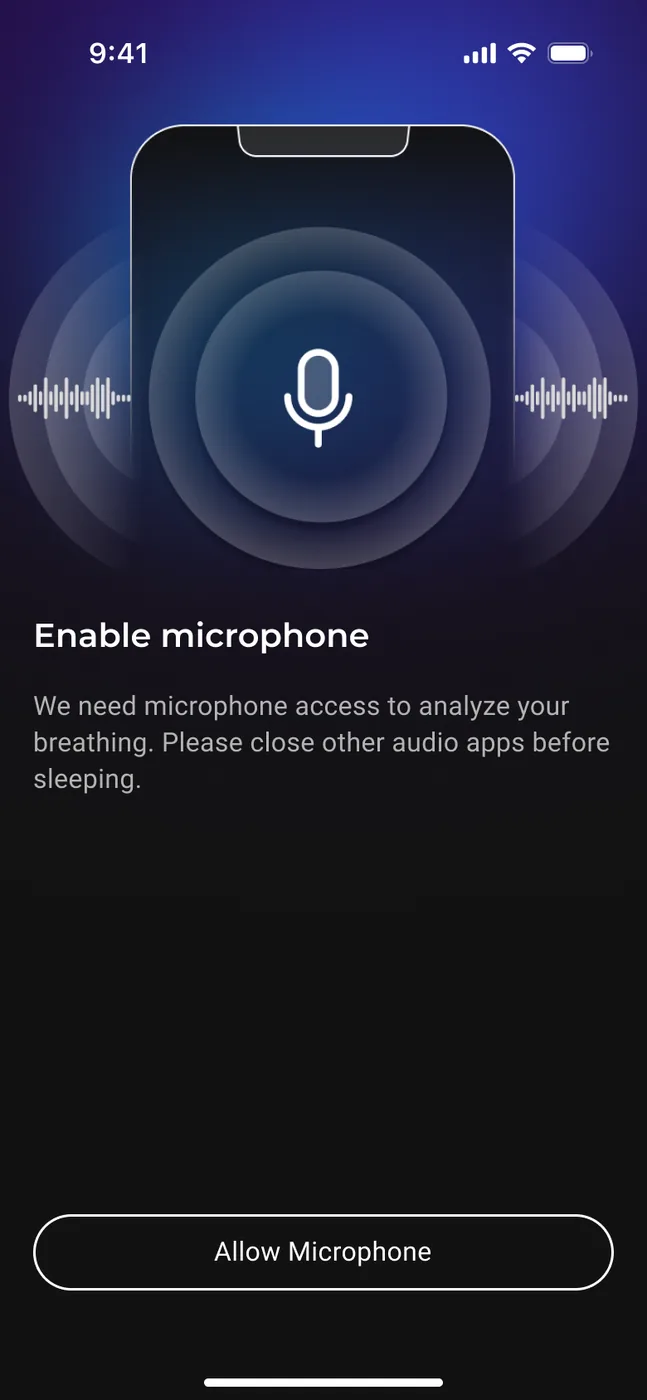
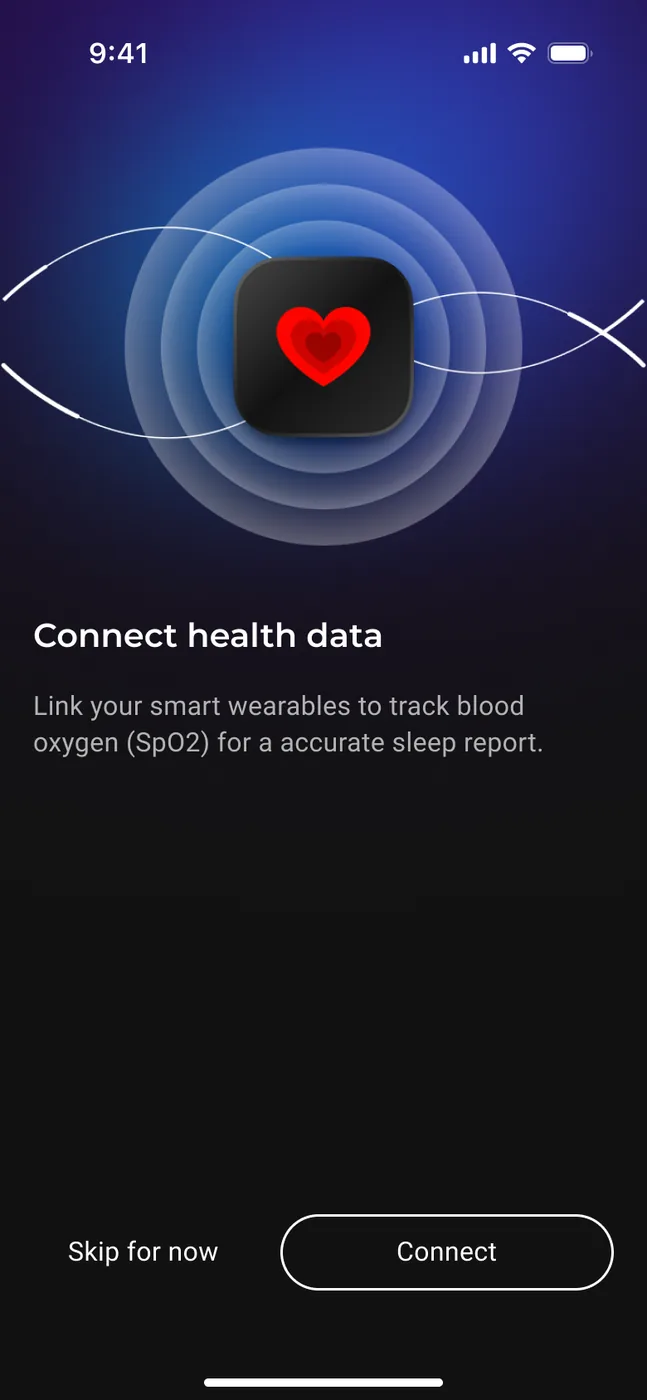
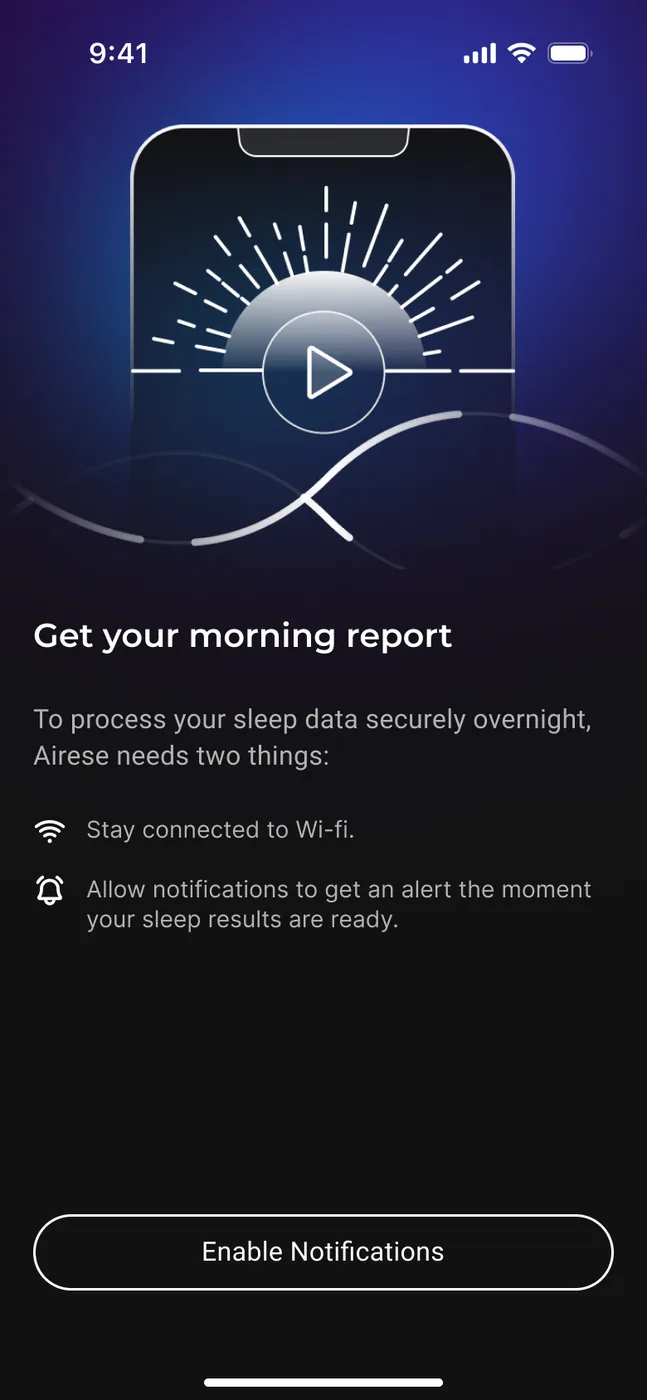
The onboarding is designed as a short introduction to Airese and a smooth setup before the sleep recording session. It explains what the app listens for, gathers the permissions that make a recording work, and gets out of the way.
- A short introduction sets expectations: what Airese detects, and that it screens rather than diagnoses.
- Each permission is requested in context and framed around what it enables, with a graceful fallback if a person declines.
- Nothing else stands between opening the app and recording the first night.
The results data is the product
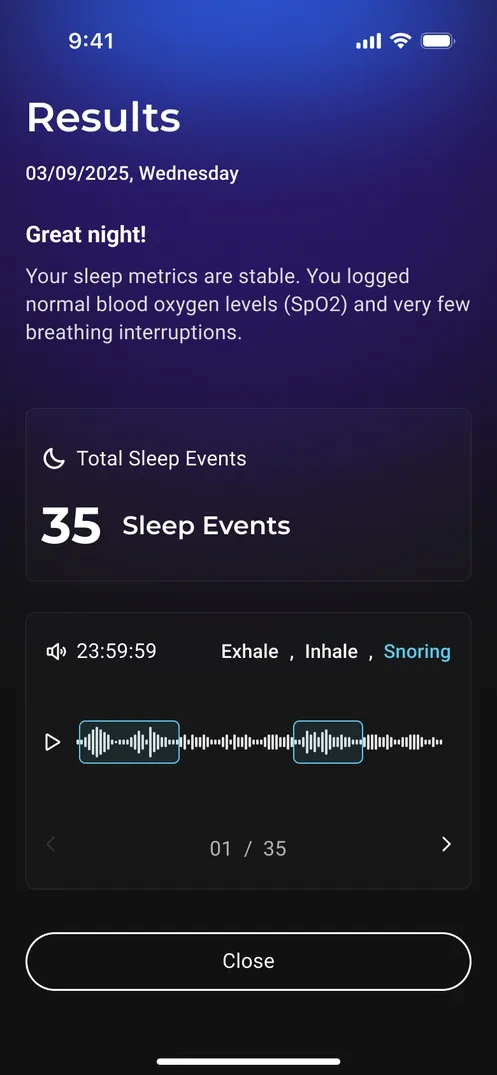
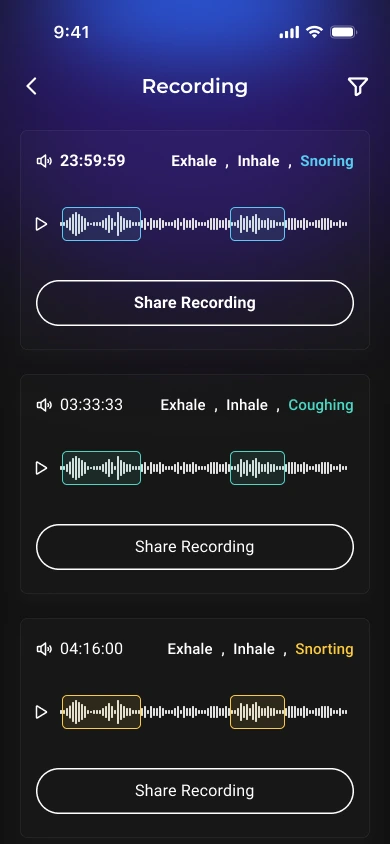
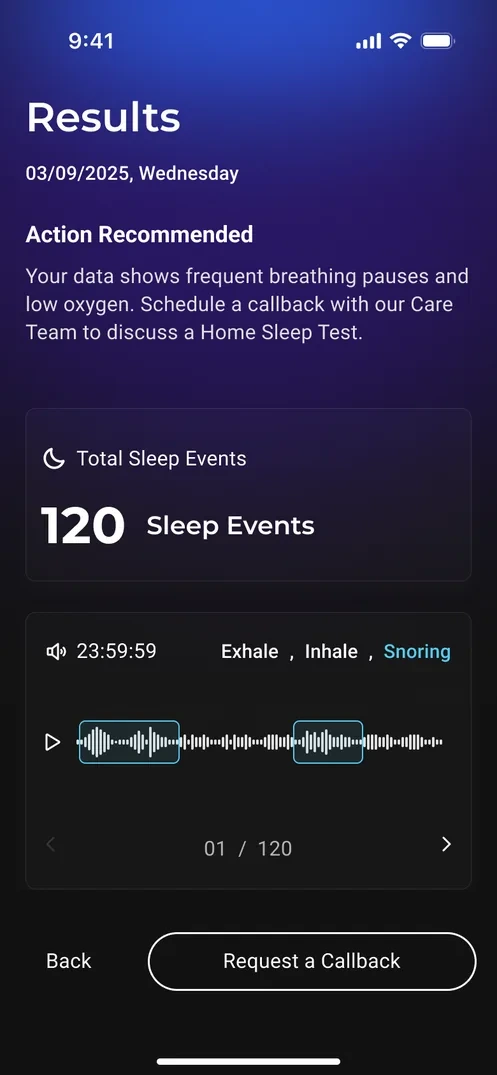
The core value of Airese is the results data visualisation. A night resolves into a detailed, interactive audio wave with annotation highlights marking each detected snore, snort, choke and gasp, so a person can see and replay exactly what their night contained. Following usability observations that people wanted immediate high-level feedback, the page is structured summary-first: the high-level verdict sits at the very top, and the granular data waits below it.
- An annotated audio wave highlights every snore, snort, choke and gasp event, each one replayable and shareable with a doctor.
- The high-level summary leads the page, so the core result is digested before any drilling in.
- Blood oxygen and event detail sit beneath the summary for those who want the granular view.
From result to human
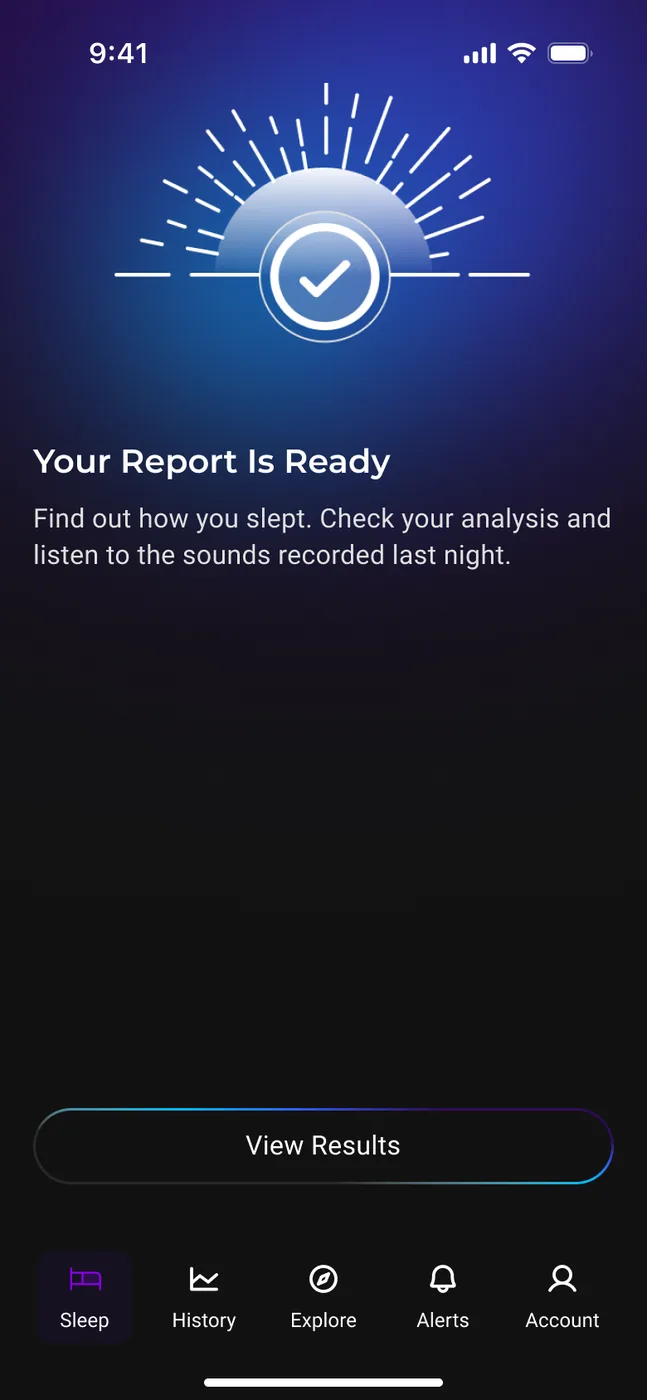
The last mile runs from the night itself to a human voice. A session records quietly until its scheduled wake-up, the report is waiting by morning, and a serious night opens a call-back with The Air Station Customer Care Centre, who guide the person toward a checkup and, where suitable, a Home Sleep Test. This is the moment the product's job ends and a human's begins.
Tested, then rebuilt
What testing surfaced
I tested the first build with 16 participants on Maze and kept 12 valid sessions. People found the app easy to learn, but two core tasks failed: first time setup succeeded only a third of the time, and finding information succeeded in two of five attempts. The causes were specific. Search returned a blank screen while claiming results existed, the category filter could freeze the app, the recording timer could not be scrolled backwards, and the results screen read like a dense infographic showing a single day. The sessions also surfaced repeated behaviours: users forgot to stop the recording after waking, reached for patterns they already knew from their own phones, and wanted a high level read of their night before any detail.
What version two answered
- 01Smart auto-stop scheduling. Because testing showed people forgot to stop recording after waking, version two lets them set multiple fixed times on specific days that end the session automatically.
- 02The familiar rotary picker stayed. Testing proved the iOS-style rotary time selection was the most familiar, easiest pattern with zero learning curve, so it was deliberately retained rather than reinvented.
- 03Summary-first results. Users wanted immediate high-level feedback, so the results page was restructured with the summary at the very top and the granular data beneath it.
Recording timer, v.01 to v.02
Motion design
5 onboarding screens in Rive, drag to browse, built light for low-end Android
Track your sleep sounds
The opening screen explains that Airese detects snoring and breathing pauses to assess sleep apnea risk, paired with a plain disclaimer that it offers insights and not a medical diagnosis.
Enable the microphone
Airese asks for microphone access so it can analyse breathing through the night, and reminds the person to close other audio apps before a session begins.
Connect your health data
Granting access to Apple Health on iOS or Health Connect on Android lets Airese read the blood oxygen and heart rate a wearable records overnight, animated as a steady heartbeat, so the morning report carries clinical context rather than sound alone.
Get your morning report
To process a night securely, Airese asks the person to stay on Wi-Fi and to allow notifications, so they are alerted the moment the sleep result is ready.
Ready for your first night
A short checklist sets the wake-up time, asks for a session over two hours, a charging phone placed about 50cm from the head, and a quiet room, then starts recording.
All screens
Outcomes
Traction before launch
The strongest evidence arrived before the product shipped. Six doctors across Singapore, Malaysia and Indonesia, spanning ENT, lung and neurology practices, committed to receive Airese referrals on the strength of the working design, giving The Air Station a three country care network from day one.
The screening journey itself collapses a 27 step paper questionnaire into 9 steps around a single night of passive recording, a 67% reduction in intake friction at the top of the funnel that feeds CPAP therapy, the business's core revenue line. Airese ships in September 2026, and every serious result it produces becomes a qualified call back for the Customer Care Centre rather than a lost lead.
What the work taught me
Sole designer on paper, alignment lead in practice. The job was holding clinical caution, engineering constraints and business goals in one coherent product voice.
Clinical alignment is a design practice
Every risk-adjacent line went through the medical advisor. Treating that review as part of the design loop instead of a final gate kept credibility and warmth from pulling the product apart.
Evidence over intuition
Recruited, moderated testing turned debate into direction. When the setup numbers came back, nobody argued about priorities. The data had already decided, and a designer with evidence moves a team faster than any opinion.
Scope to what can be staffed
Users asked for one-to-one expert help we could not resource. The honest answer was a scoped one: a critical result books a real call-back, and an Explore library keeps trustworthy guidance in-app. Negotiating that trade-off protected both users and the roadmap.
Language is risk management
Framing the result as an 'awareness indicator, banded by severity' let the product be useful and safe without ever overstepping into diagnosis. The most important design decisions were sentences.